





![Viral House Party Video Sparks Conversation on Changing Social Norms Among Nigerian Mothers [Watch Video]](https://kumornews.com/wp-content/uploads/2026/02/Viral-House-Party-Video-Sparks-Conversation-on-Changing-Social-Norms-Among-Nigerian-Mothers-Watch-Video-1-360x180.jpg)



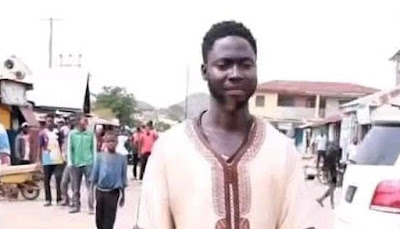
In the aftermath of the latest violence in Plateau State, a story of quiet courage has emerged from Anguwan Rukuba in Jos—one that cuts against the grain of the familiar narrative of division. Sa’idu Murtala, a Muslim trader, says he is alive today because a Christian resident he barely knew chose, in a moment of chaos, to open his door rather than shut it.
The attack, which unfolded on Sunday, March 29, coinciding with Palm Sunday observances, left more than 40 people dead, according to local accounts, and triggered panic across the community. While security agencies have yet to provide a full official breakdown of casualties and arrests, residents describe the incident as sudden and indiscriminate.
Murtala, who sells garden eggs in the area, was at his stall when gunfire broke out.
“Everybody was looking for somewhere to hide. All of a sudden, a Christian man quickly opened his house and hid me inside,” he told Daily Trust. “I completely lost my senses, thinking I would be killed because the situation was terrifying.”
A Night of Shelter Amid Chaos
According to Murtala, the man—whose name he did not disclose—took him into his home, hid him in his wife’s room, and ensured he was fed and reassured through the night. By morning, when the situation had calmed slightly, the resident contacted Murtala’s father, who came to retrieve him.
The trader said the man was fully aware of his religious identity.
“He knows I am a Muslim because I used to do my business there every day… I will never forget this man who saved my life.”
Even in the confusion that followed the attack, Murtala said neighbours returned his mobile phone, which he had earlier given out for charging—another small but telling detail of communal trust under strain.
Yet, not all stories from that day have a hopeful ending. Murtala says his friend Hassan, a sugarcane seller who had been with him shortly before the shooting began, remains missing. Efforts to reach him have so far been unsuccessful.
What Happened—and What Is Still Unclear
Details of the attack remain fragmentary. Residents report that gunmen opened fire in the area around 7:30 p.m., sending traders and passersby scrambling for safety. The identity and motive of the attackers have not been officially confirmed at the time of reporting.
Plateau State has long grappled with cycles of violence often framed along ethnic and religious lines, though analysts note that underlying issues—land disputes, political representation, and economic pressures—are frequently at play.
A Familiar Flashpoint
Jos and its surrounding communities have, for decades, sat at the fault line of Nigeria’s “Middle Belt” tensions. Clashes in the region are often interpreted through a Muslim-Christian lens, but such framing can obscure the complex mix of local grievances and opportunistic violence that fuel these incidents.
In recent years, sporadic attacks have continued despite increased military presence and government assurances. For ordinary residents—traders like Murtala, farmers, and families—the unpredictability of such violence has become part of daily life.
Beyond Division: The Human Factor
Murtala’s account offers a counterpoint to narratives that reduce such conflicts to religious binaries. His reflection is blunt:
“In both Christianity and Islam, there are good and bad people. But if all people were like this man who saved my life, the world would be at peace.”
For many Nigerians, especially in mixed communities, coexistence is less an abstract ideal and more a practical necessity. Acts like the one described—quiet, unpublicised, and risky—rarely make headlines, yet they often determine who lives and who does not when violence erupts.
What Comes Next
Authorities are expected to intensify security operations in the area, though residents remain sceptical about long-term protection. Community leaders have, in past incidents, called for dialogue and early-warning systems to prevent escalation, but implementation has been uneven.
For survivors like Murtala, the immediate concern is recovery—both personal and communal. The search for missing persons, including his friend Hassan, continues, underscoring the lingering uncertainty that follows such attacks.
As investigations proceed, the incident raises familiar questions: how to secure vulnerable communities, how to address root causes of recurring violence, and whether stories like Murtala’s can translate into broader trust in places where suspicion often runs deep.
For now, one man’s decision to open his door stands as a reminder that, even in moments of collective fear, individual choices can redraw the line between tragedy and survival.